Modular pavilion and spatial installation for the foodculture days festival
- Year: 2023 - ∞
- Location: Vevey (CH)
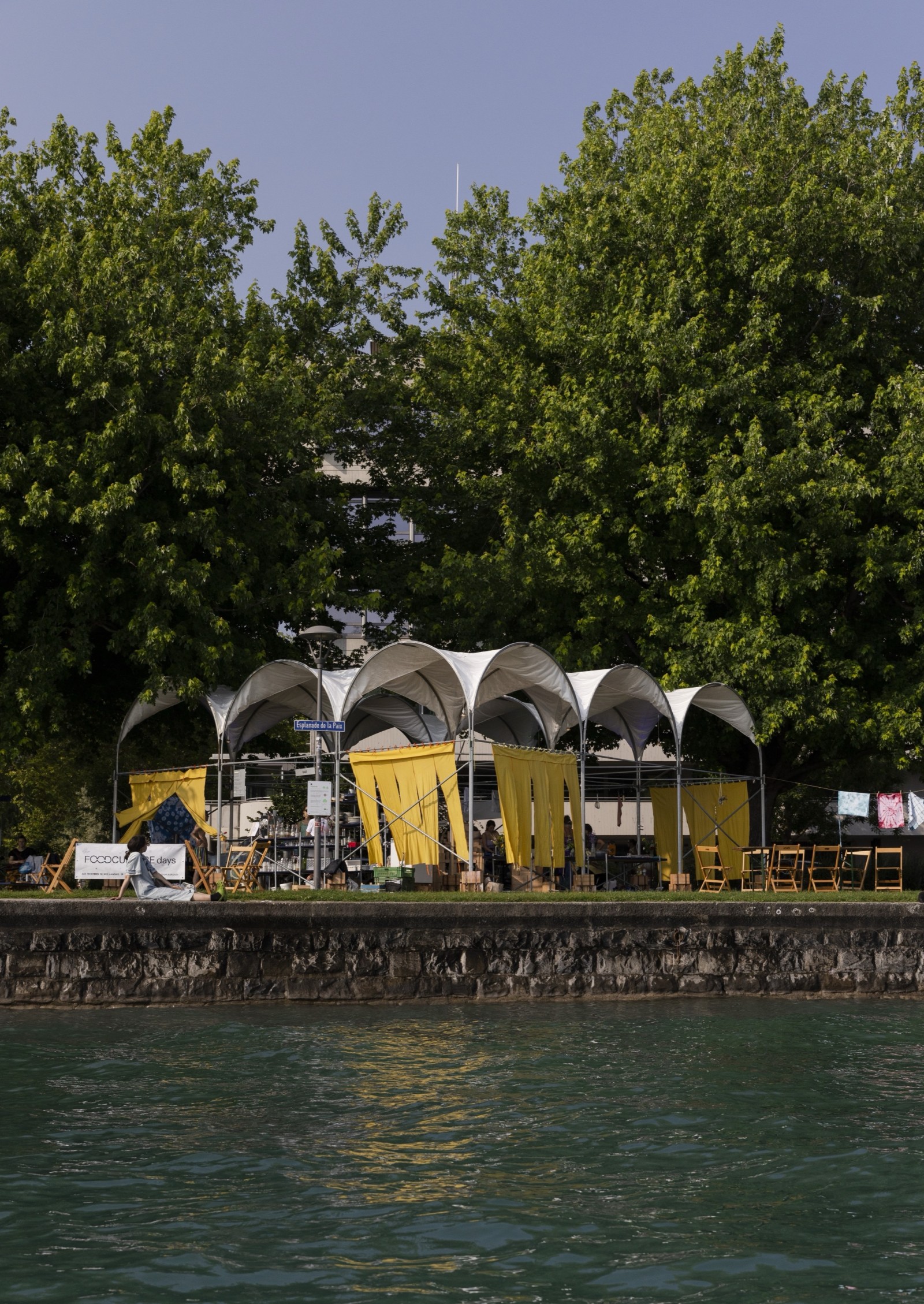


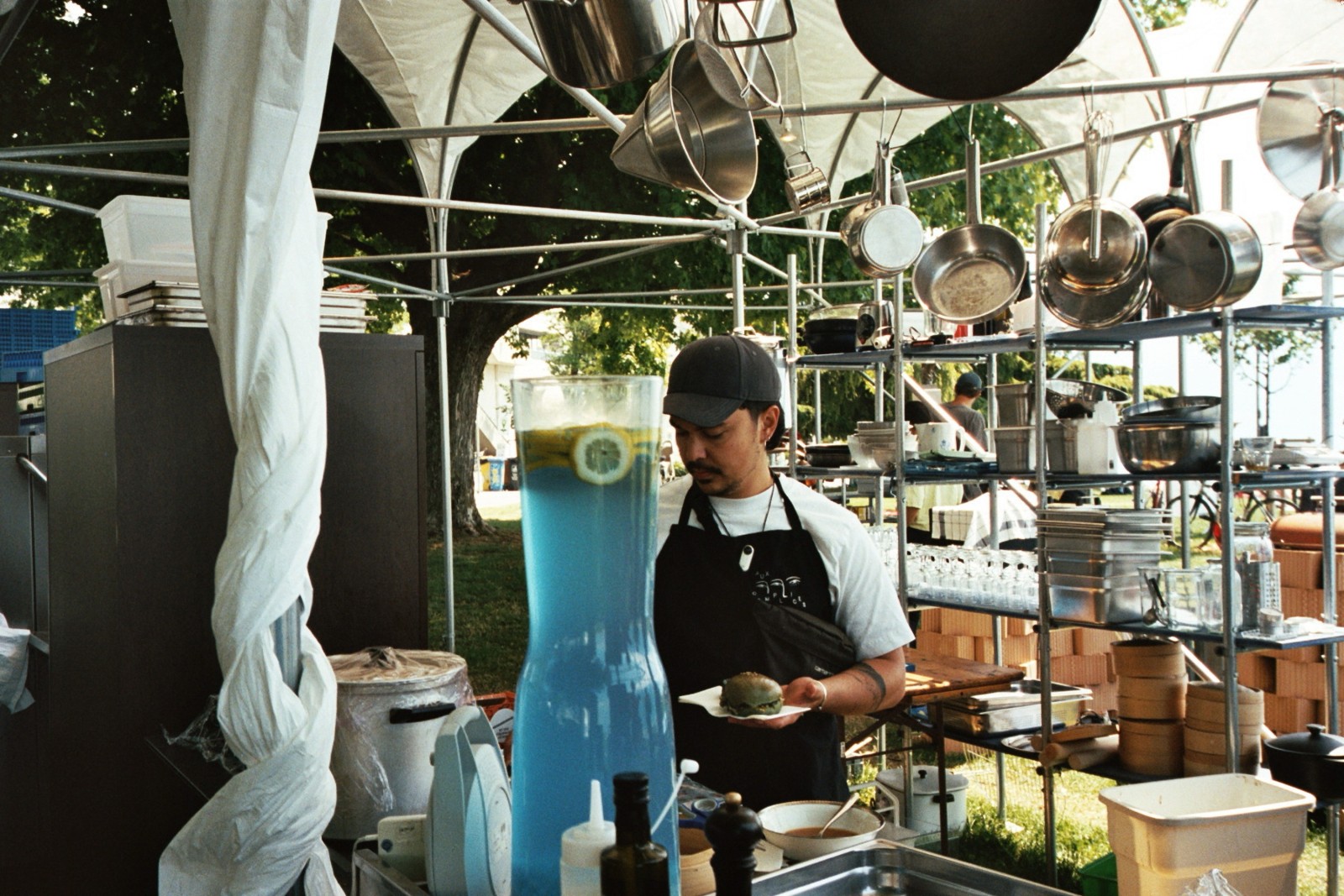

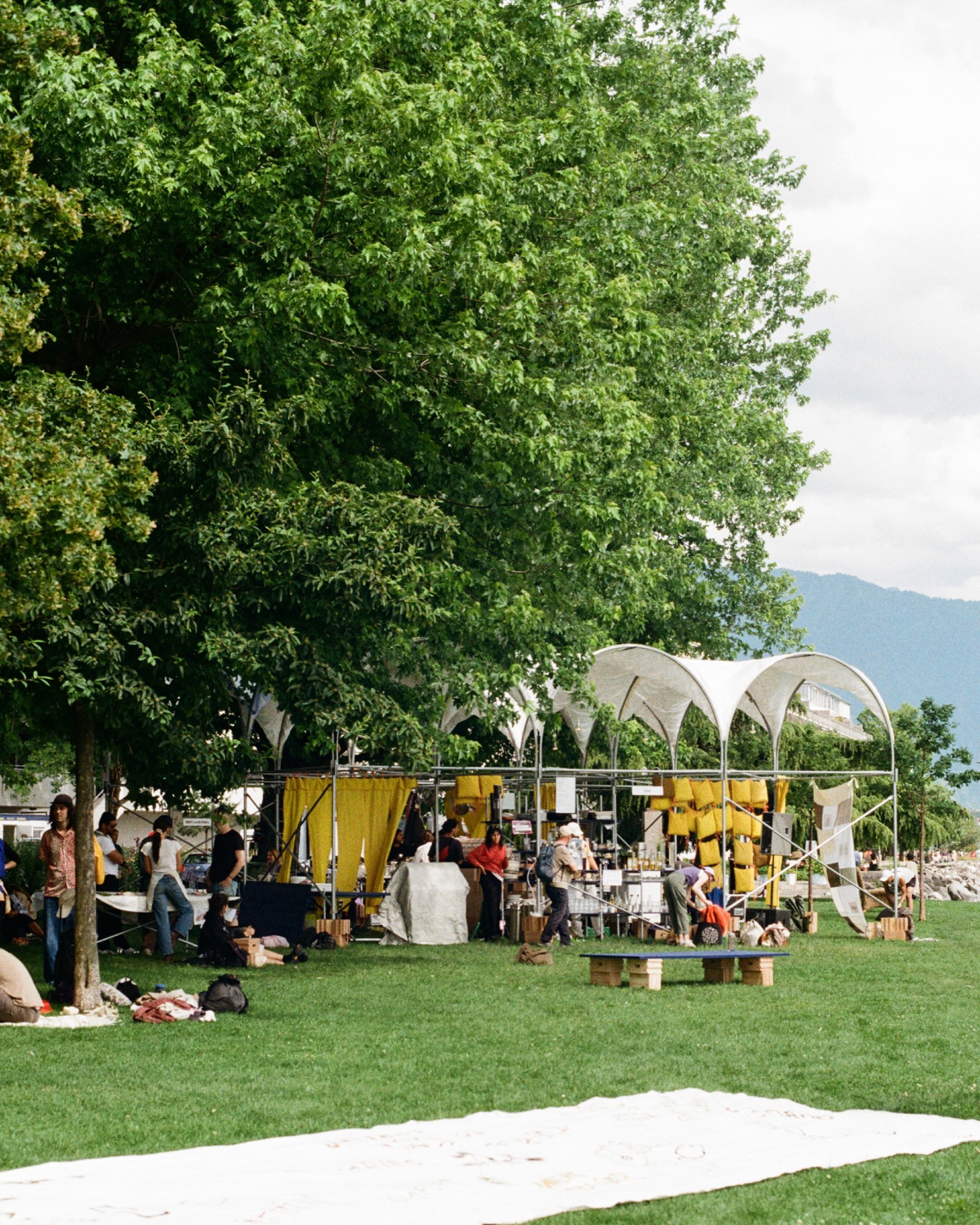


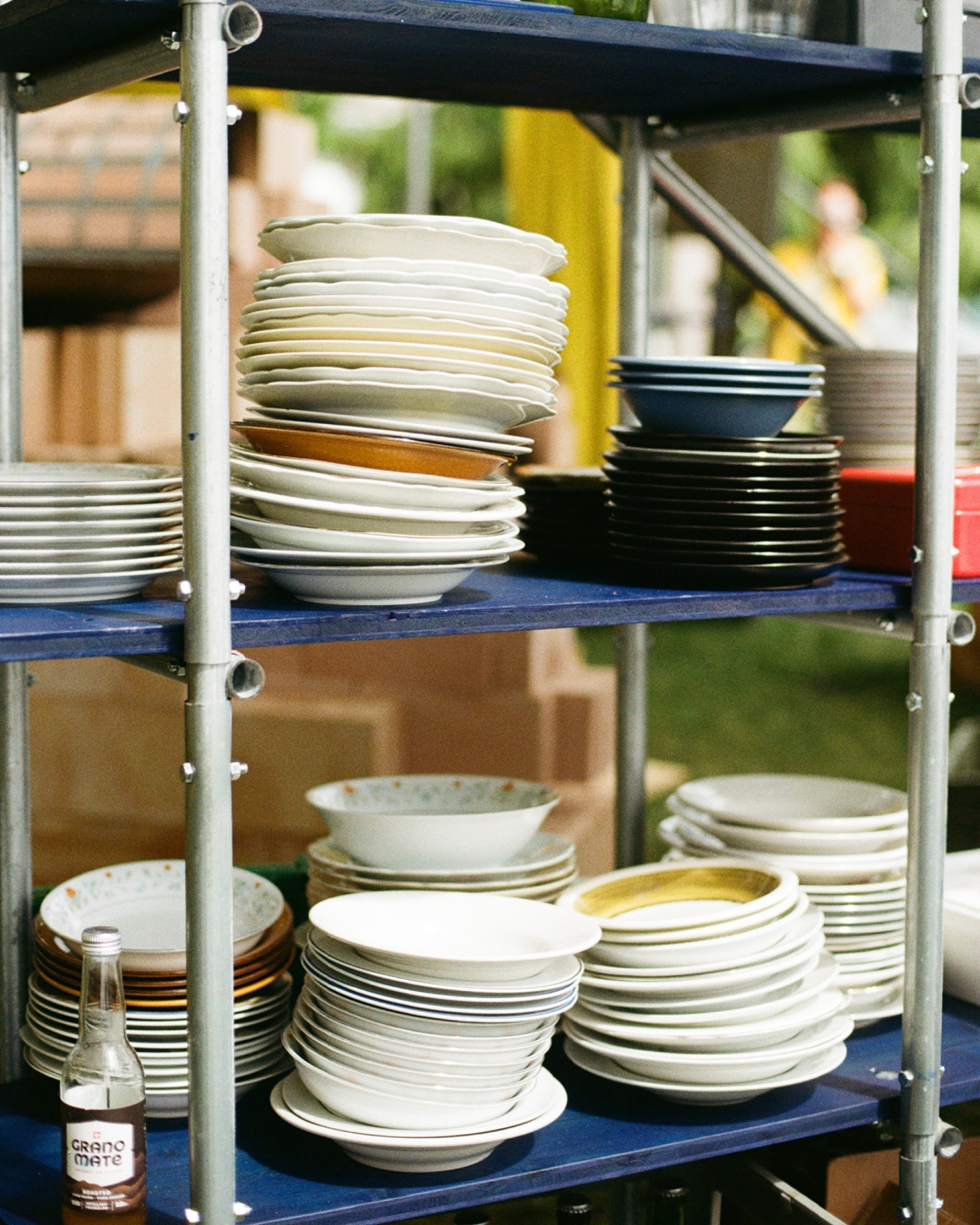


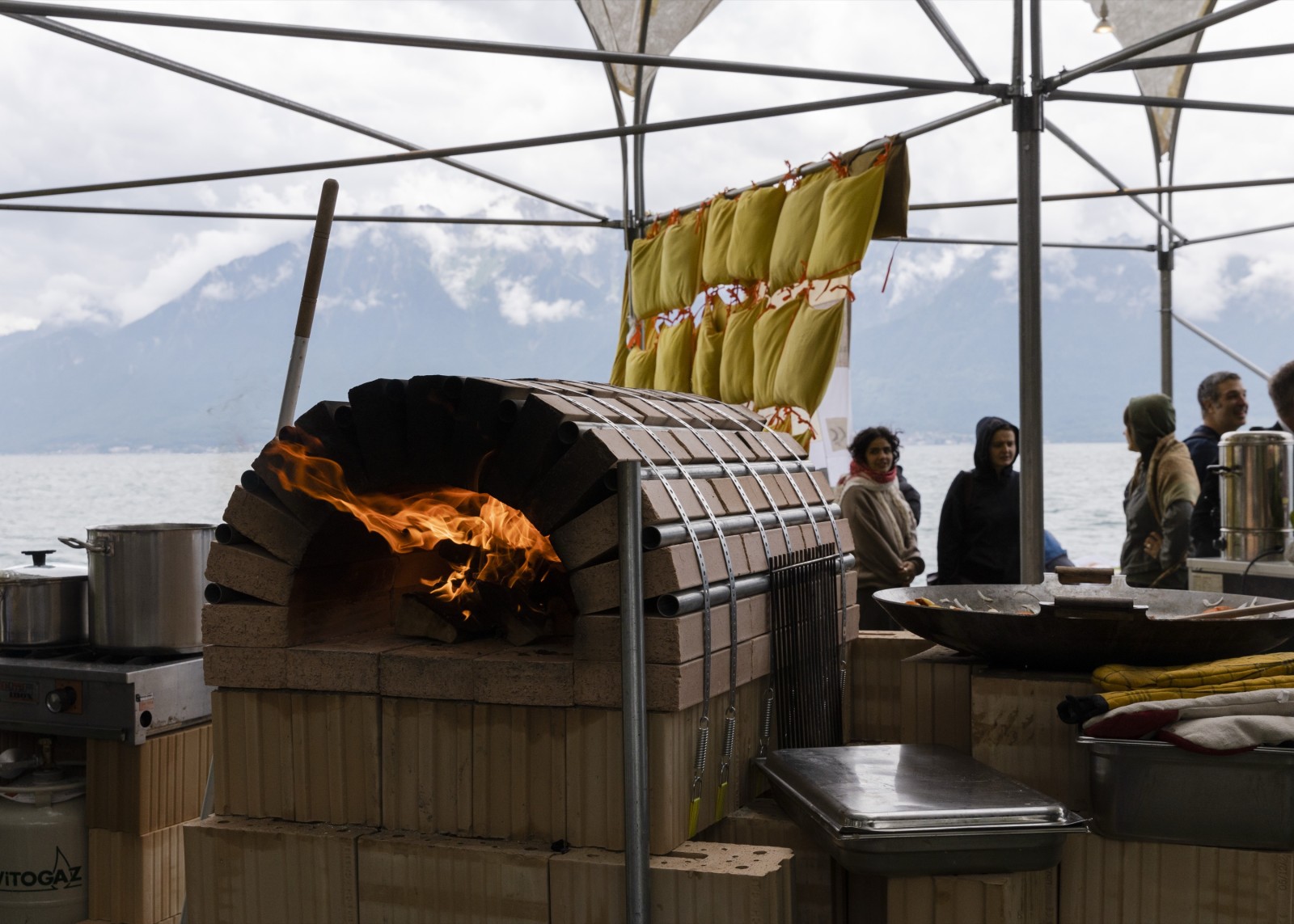

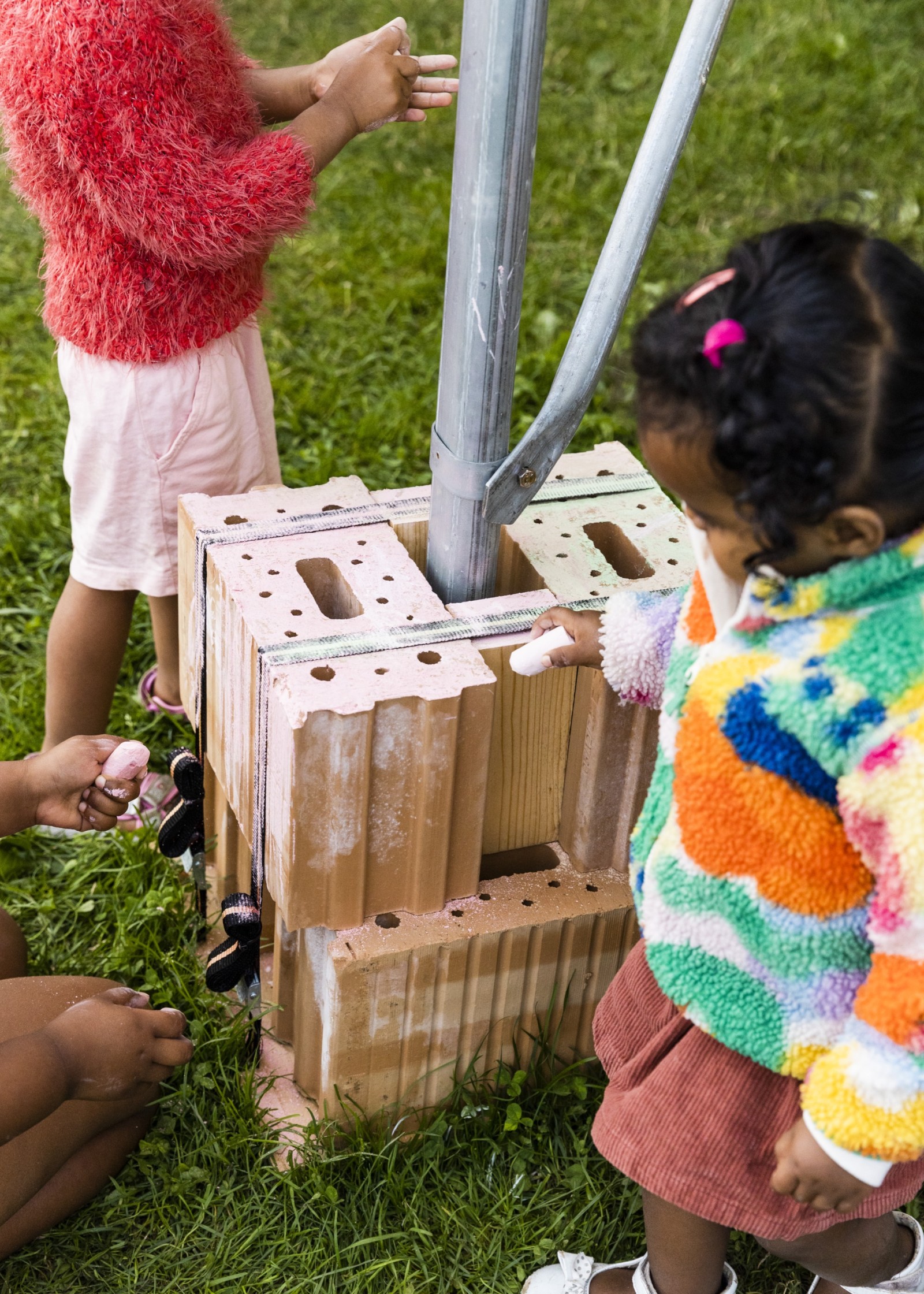

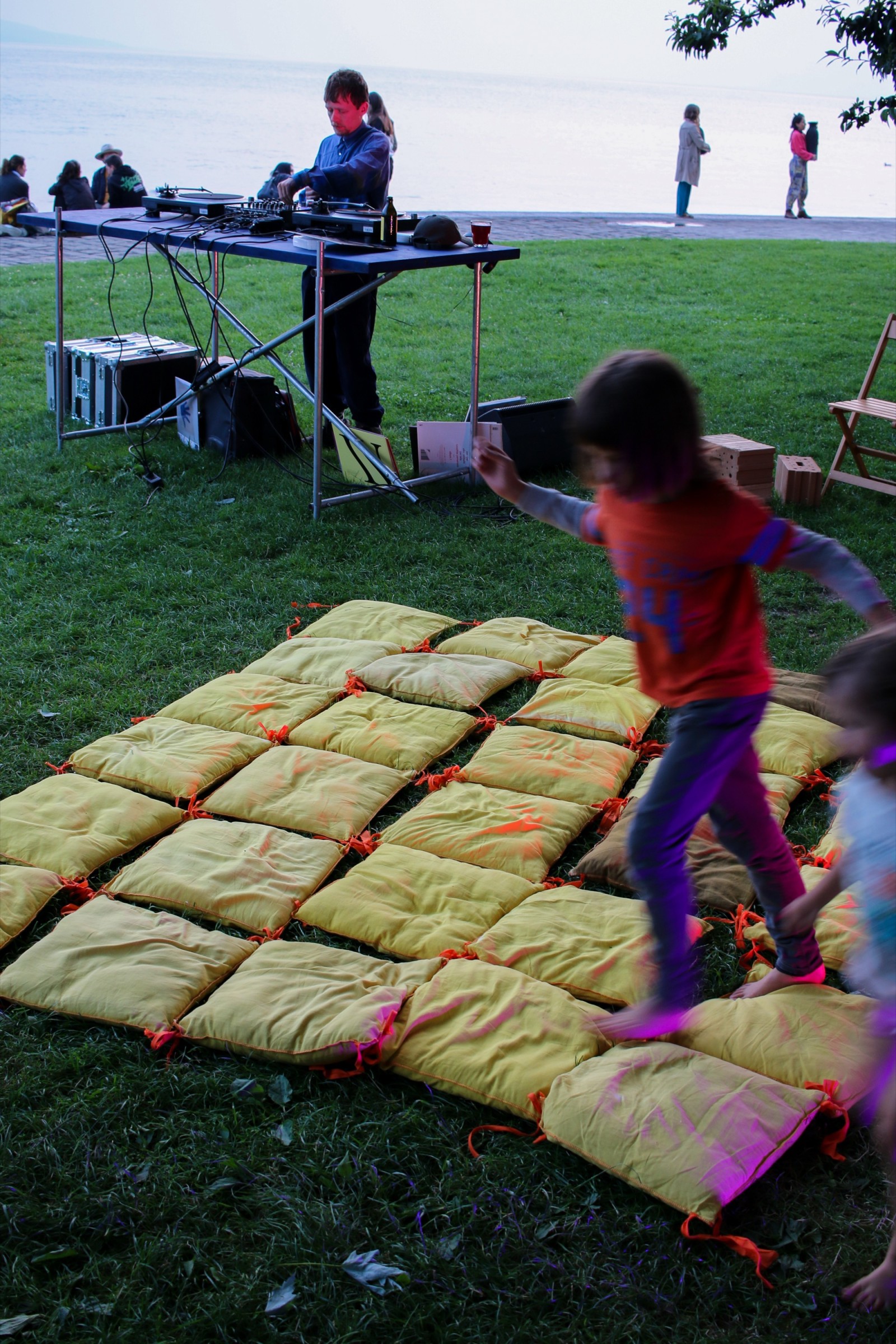
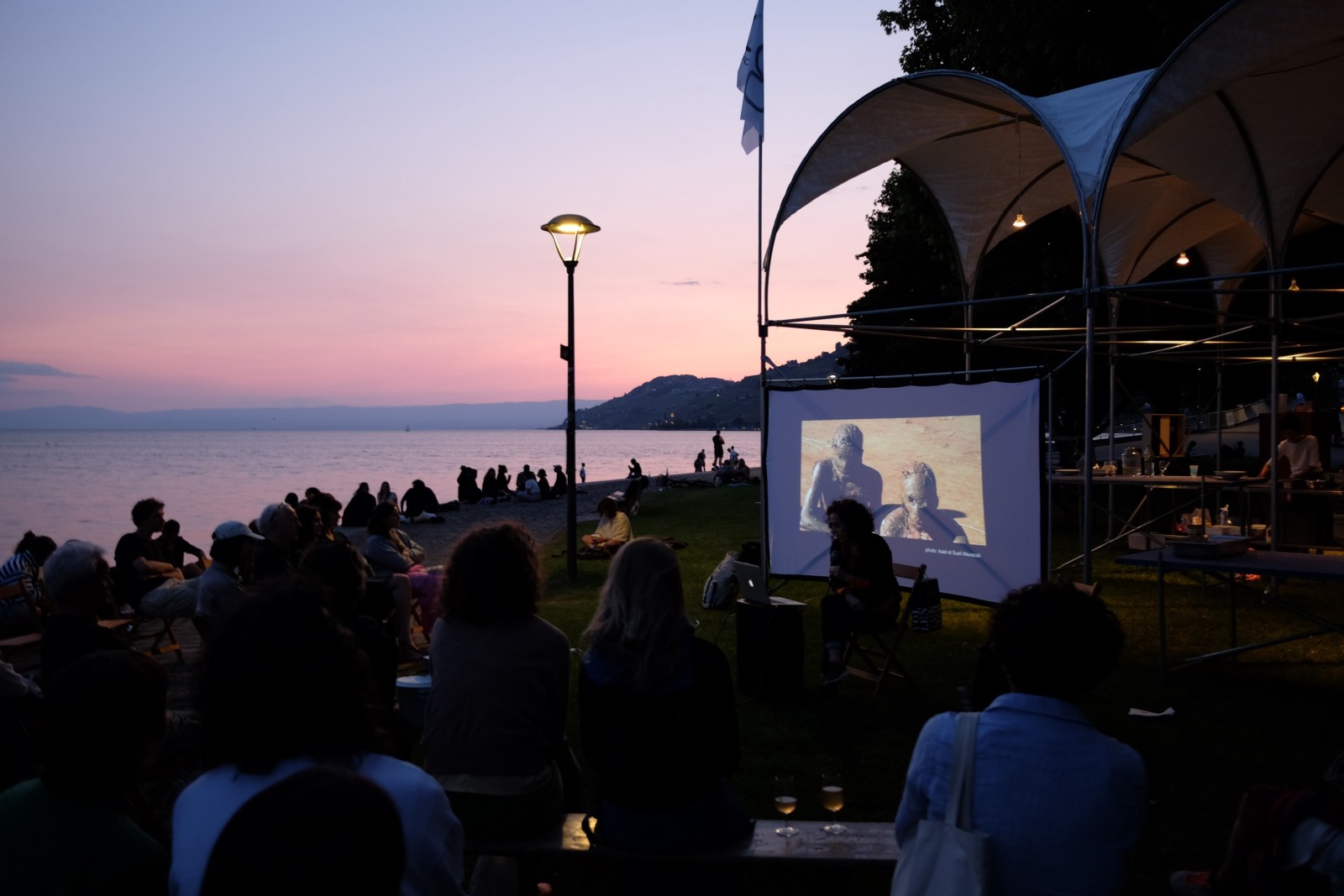
Cuisine is a spatial project that is at once sensitive, open, playful and experimental. It forms part of an artistic practice attentive to the relationships between objects, bodies and environments. Nourished by a deep attachment to craftsmanship and its tools, this approach advocates a situated practice where ordinary gestures — cooking, assembling, sharing — become levers for fostering forms of conviviality in the public space.
Cuisine thus presents itself as a multifaceted environment. More than a mere functional installation, it constitutes a space capable of supporting, bringing together and encouraging the practices of the biennial.
Situated by the lakeside in Vevey, on the Esplanade de la Paix, along a busy promenade, the structure seeks to blend into the landscape. It aims to be both open and welcoming, inviting passers-by to stop and linger, whilst precisely meeting the festival’s curatorial needs. Autonomous yet collective, it strikes a balance between hospitality and functionality.
Cuisine takes the form of a metal structure made up of components sourced from agricultural greenhouse catalogues. Assembled using standardised elements that have been repurposed and adapted, it is organised around a 3.1 metre bidirectional grid. Pillars punctuate the space, whilst arches rise to form ridge vaults that lend the pavilion an almost sacred quality. This modular construction system allows the structure to expand, contract or be reconfigured according to the festival’s needs, thereby affirming its evolving and contextual nature.
The project is extended by a series of furniture pieces—tables, shelves—designed using the same standardised elements.
Open and permeable, Cuisine establishes a constant dialogue with its surroundings. Only a textile covering, stretched across the vaults, offers minimal protection from the elements. This act of transposition—from agricultural greenhouse to cultural pavilion—shifts the perspective. Here, this repurposing becomes a language that is both playful and symbolic, paving the way for more raw forms of experimentation, where cooking and creating become an adventure.
Textiles play a central role in the installation. Curtains, tablecloths, towels, picnic blankets, flags and protective screens form a collection of movable elements that can partition, define or connect spaces. Naturally dyed using reseda, a flowering herbaceous plant, these fabrics—now a sunny yellow—embody the project’s mindful relationship with the region’s resources and its beauty. They act as true mediators between architecture and its uses, fulfilling caring functions: protecting, informing, sheltering, decorating and even cleaning.
At the heart of the design lies the foyer, which serves both as a spatial centre and a focal point of symbolic significance. Yet it acts as a decentralising force: it generates circular pathways, encourages wandering and fosters informal encounters. Designed as an open, adaptable space, it can be freely used by both cooks and visitors.
Built from terracotta bricks laid directly on the floor, the hearth offers a wood-fired cooking space that brings ingredients, energy and culinary gestures into direct contact.
By radicalising the concept of the kitchen, the project returns to the essentials. It acts as a platform to revive simple gestures, experiment with forms of collective organisation and open up a space for the imagination. Cuisine deeply explores the way in which tools shape our practices and influence how we act, think and connect with one another.
Project team for 2025 edition (ovens and textile work): Elias Taillebois, Jean-Michaël Taillebois, Sébastien Tripod in collaboration with Mélissa Rouvinet
Project team for 2023 edition (structure and furniture): Sébastien Tripod in collaboration with Mélissa Rouvinet and Mara Usai
construction assistance: Antonin Basser, Stephan Weber
natural dyeing: maison teintée
metal structure: Sansonnens
Commissioned by foodculture days
Produced with the help of many volunteers