Transformation of a family home in the mountains
- Years: 2022 - 2024
- Location: Montreux (CH)








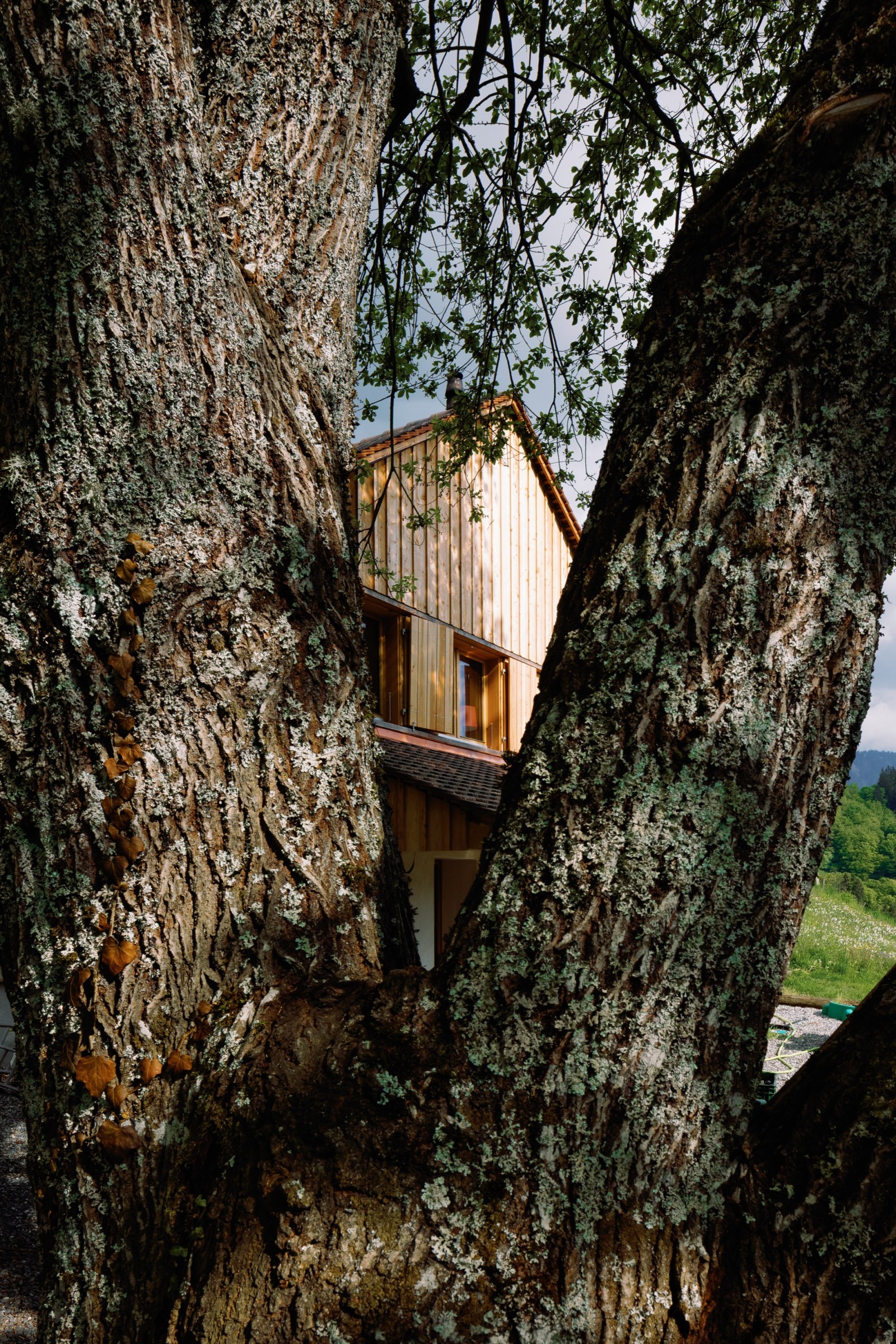

How can an old rural building in the Vaud Pre-Alps be transformed into a family home while preserving its character?
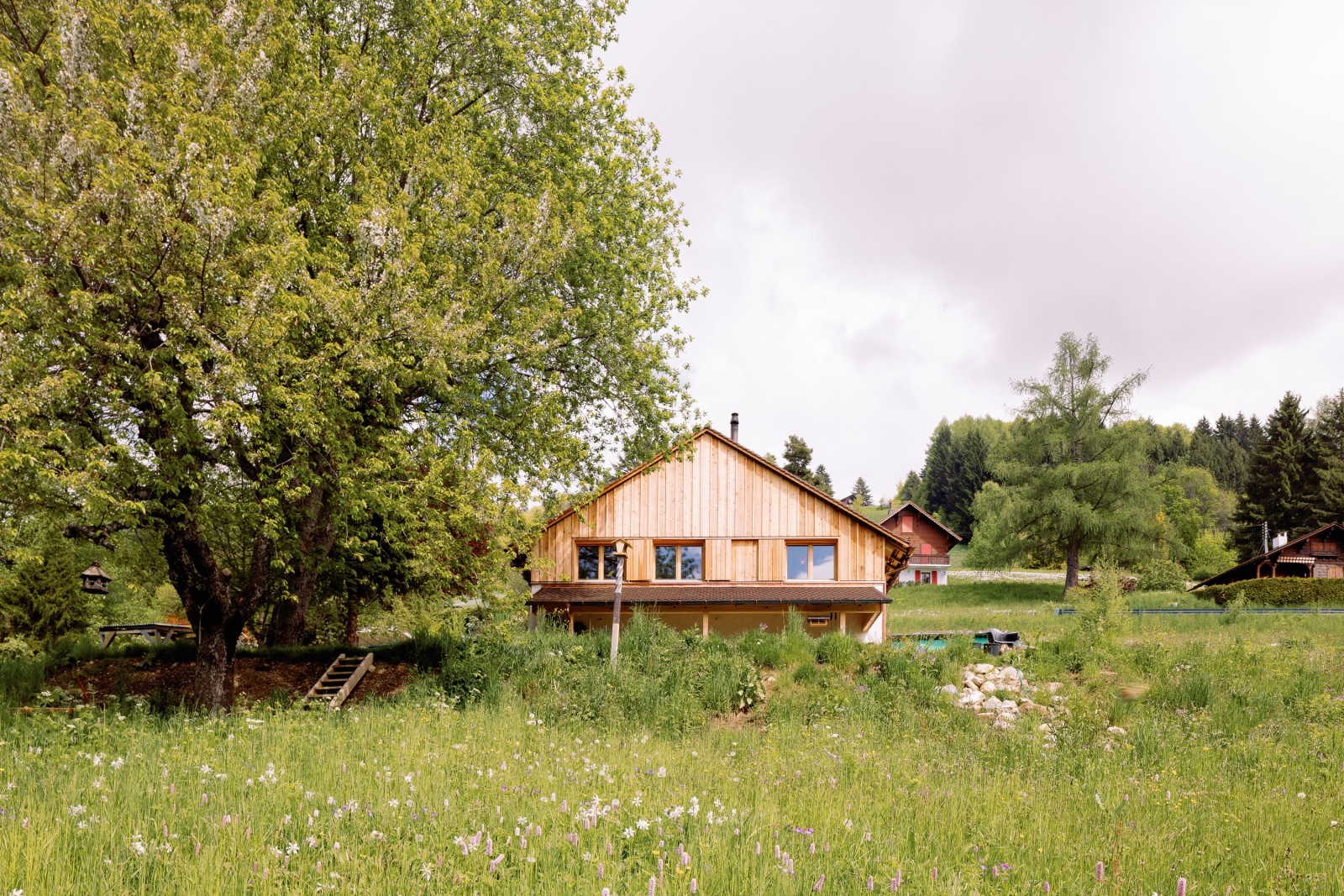
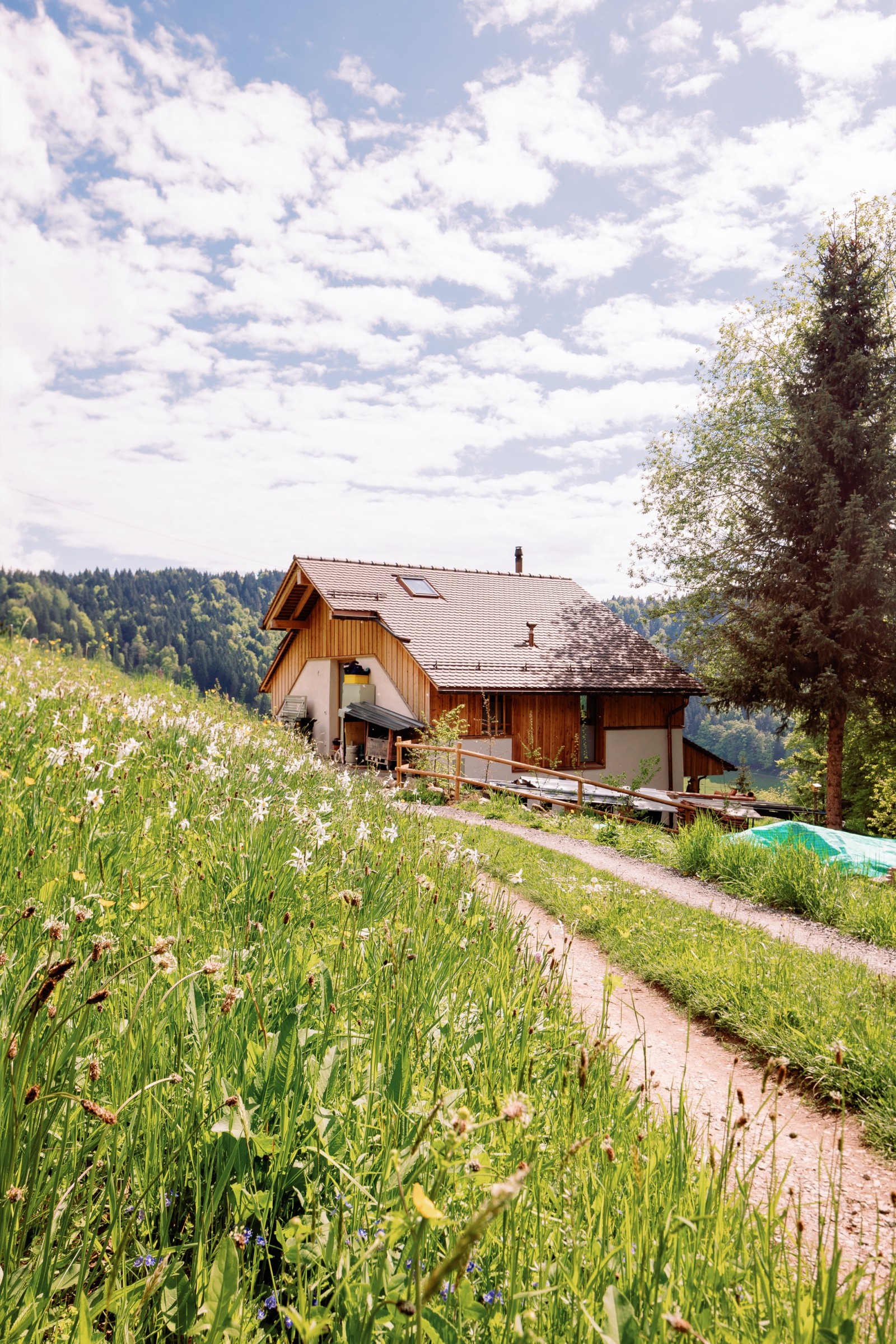
Dating back to the 19th century, this rural building has undergone several transformations over time, including the addition of a wooden upper extension. Located outside a residential zone, its volume is now strictly regulated by law. The project responds to these constraints by preserving the entire existing masonry silhouette while reinterpreting the wooden upper level.
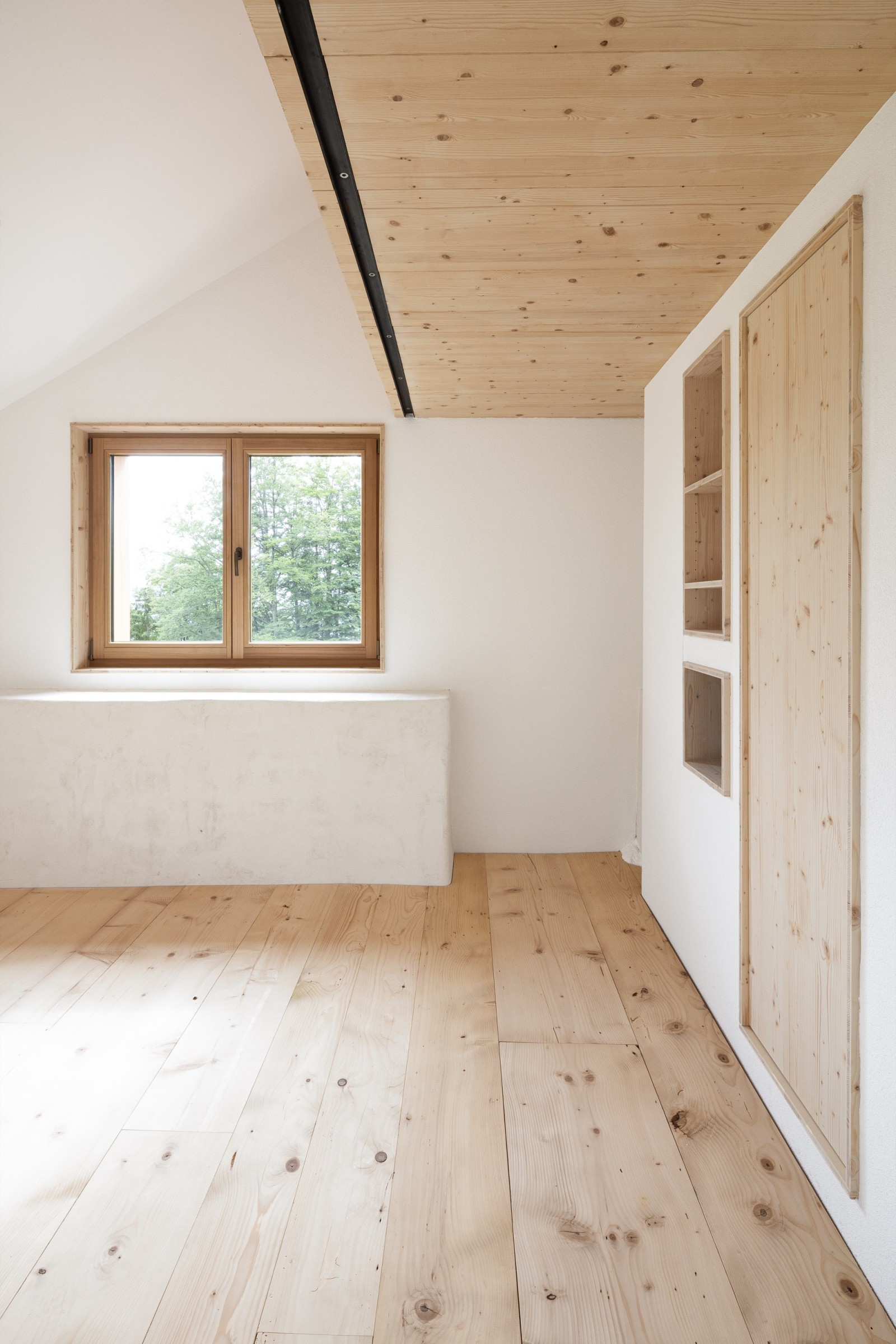
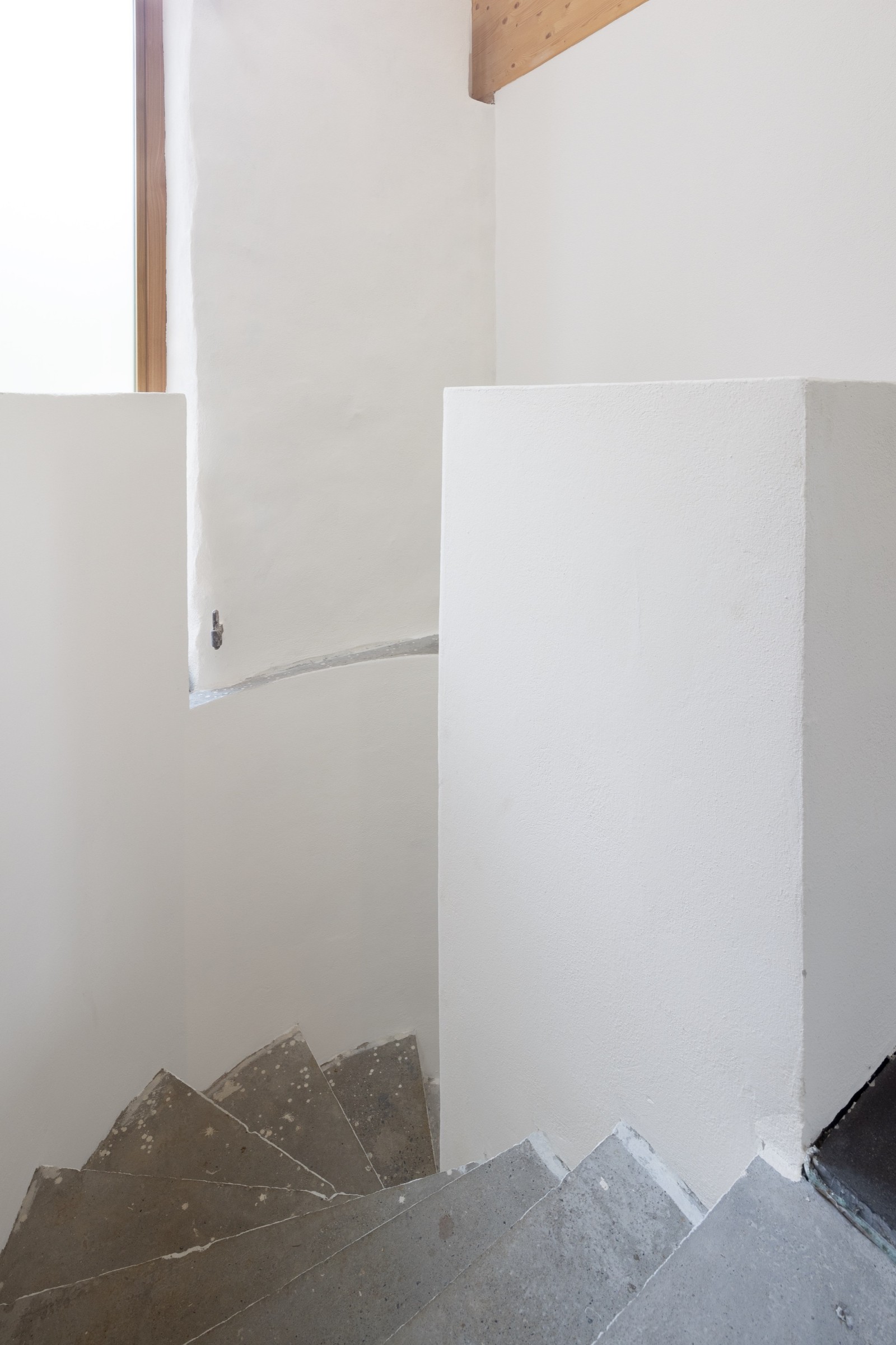
Anchored in the slope, the house is organised around a stone base that accommodates the shared living spaces. The upper floor, built primarily of wood, contains the bedrooms. Two intermediate roof beams, each 1.20 metres high, cross this level: they support the attic floor while structuring the spatial organisation. The staircase linking the two floors opens onto a double-height space—the only breathing space in this compact house, where every cubic metre is carefully optimised.
On the façade, the stone base is clearly articulated, while the upper volume is distinguished by vertical larch cladding. An ever-changing line, punctuated by uses and openings, creates a sensitive and playful pattern. The careful treatment of openings and the roof expresses a simple, timeless architecture that integrates discreetly and respectfully into its landscape.
Each spring, the flowering of the Narcissus—a protected regional species—transforms the surrounding landscape and highlights the fragility of this ecosystem. This living presence guided the project’s design choices, with an emphasis on restraint and respect for the site, affirming a way of living attentive to seasonal rhythms and to all forms of life.
At the heart of the house, a central wood-burning stove provides heating through natural convection. Heat is distributed via soundproofed vertical ducts: warm air rises to the bedrooms before descending through the stairwell. The stove is hydraulic and also produces domestic hot water, complementing the solar thermal panels that supply the hot water tank and the heating system. Heat distribution is ensured by low-temperature underfloor heating, providing good thermal inertia. Developed in close alignment with the family’s lifestyle, this approach promotes energy efficiency and a high degree of self-sufficiency, with firewood sourced from the surrounding forests.
Project team: Zoé Aymon, Esther Chatelain, Flavio Ribeiro, Jean-Michaël Taillebois, Sébastien Tripod
in collaboration with:
Civil engineering: Gex et Dorthe
Building physics: Perenzia
Project Owner: private